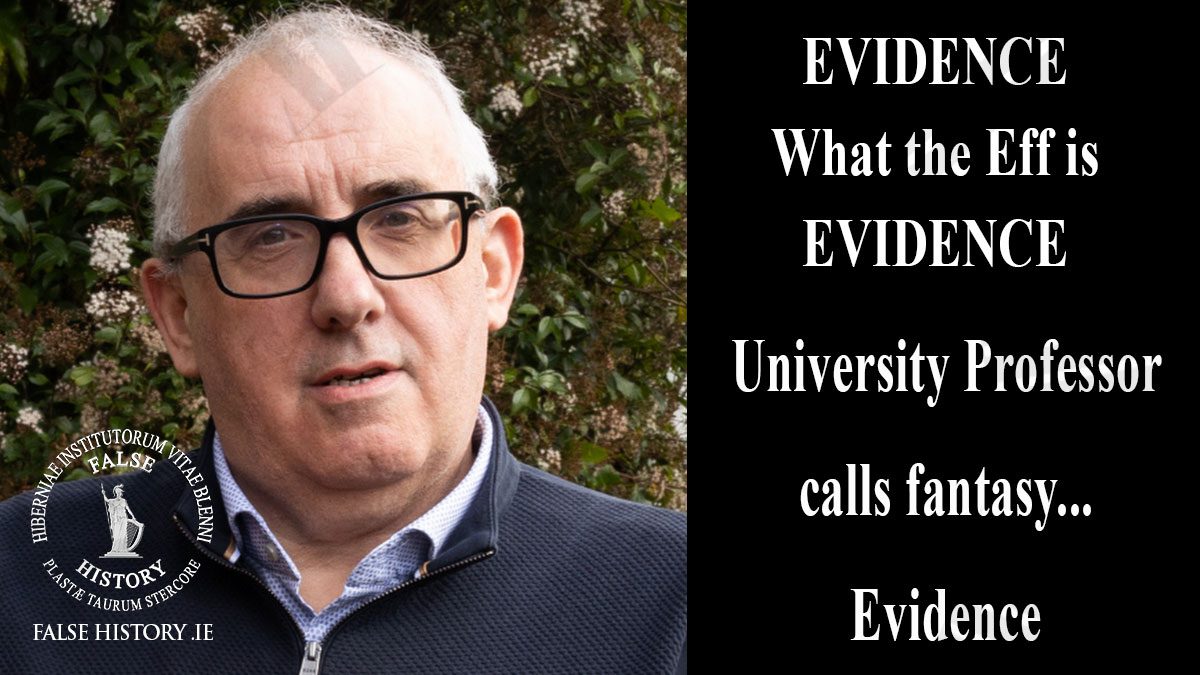
Professor Thomas Garavan of University College Cork, told the Irish Examiner that “I would have expected more evidence-based analyses supported by historical evidence, greater objectivity, and most of all compassion.”
On that point, there is full agreement.
The difficulty lies not in the aspiration to evidence, but in how evidence is interpreted.
Garavan was reacting to a previous article published in the same paper that quoted Fr Kilcoyne.
A priest and former diocesan secretary of Tuam has criticised the excavation of remains underway at the former mother and baby home in the town, describing the nuns who ran the institution as “outstanding”.
A recurring claim in media commentary is that children in the Tuam Home were abused or deliberately starved because they were born outside marriage. That is a grave allegation. It requires correspondingly grave evidence.
Yet no documented finding in the Commission’s 3,000-page report establishes systemic starvation or intentional cruelty by the women who operated the institution. Descriptive mortality data is frequently cited. Causal proof is not.
One frequently overlooked fact complicates the common narrative: 79 of the 796 recorded deaths involved children born to married parents. If illegitimacy alone were the operative mechanism of maltreatment, that figure becomes difficult to reconcile.
That does not eliminate suffering. It does not negate poverty. It does not deny tragedy. But it does caution against simplistic causation.
The Commission examined over one million documents. It documented deprivation, high mortality in poor populations, and systemic weaknesses. It did not produce evidence of organised murder.
When serious accusations circulate, it becomes essential to distinguish:
description from attribution,
high mortality from deliberate harm,
inference from proof.
Compassion and rigour are not opposites. They are partners. If one dominates without the other, public understanding suffers.
The excavation process may yet clarify the historical record further. What it cannot justify is certainty beyond what the documentary evidence supports.
Historical inquiry demands more than outrage. It demands proportion.
Fr Kilcoyne has more evidence on his side than Prof Garavan.
EJ
Fr Kilcoyne’s remarks
https://www.irishexaminer.com/news/arid-41695316.html
Note the deliberately misleading headline, and note it was one person who complained.
https://www.irishexaminer.com/news/arid-41697461.html
