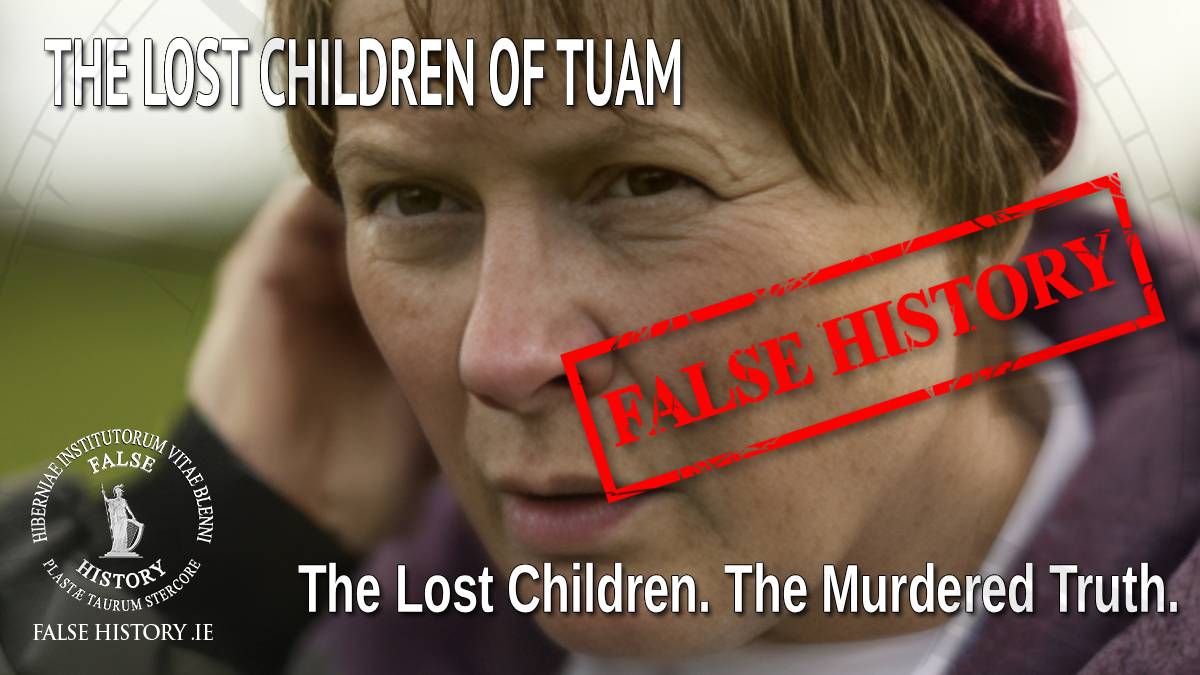
The Tuam story is so detached from its evidential foundations that, presented as fiction, it would be dismissed as implausible.
Catherine Corless advanced a series of sensational claims about Tuam, claims that were repeated across the world as established fact, even though the Commission of Investigation did not substantiate them. Yet the story survived. The evidence changed; public belief did not.
At the heart of the narrative was an even greater accusation: that unmarried mothers were systematically persecuted by Irish society, and that their children were neglected, starved or allowed to die because they were deemed an embarrassment. Historian Diarmaid Ferriter went so far as to suggest that the State entrusted these children to religious orders in order to “get rid of an embarrassment”, a phrase that carries the unmistakable implication of deliberate elimination.
It is an extraordinary charge. It is also one for which extraordinary evidence should have been required. Instead, allegation hardened into headline, headline hardened into orthodoxy, and orthodoxy became almost immune to contradiction.
The real mystery of Tuam is therefore no longer simply how such claims came to be believed. It is why so many people remain determined to believe them after their most lurid elements have failed the test of evidence.
That question opens a far darker inquiry. Why would a nation be so eager to convict itself of crimes against humanity? Why would politicians, academics and journalists prefer an emotionally satisfying indictment to a more complicated historical truth? And what does that appetite for national guilt reveal about twenty-first-century Ireland?
The lost children became the centre of a global scandal. But somewhere in the telling, the truth became another casualty.
My new video documentary TUAM investigates how the story made global headlines and reveals some shocking truths. Due out in autumn 2026.
